THE PLACE TO EXPLORE
ADMONT BENEDICTINE ABBEY
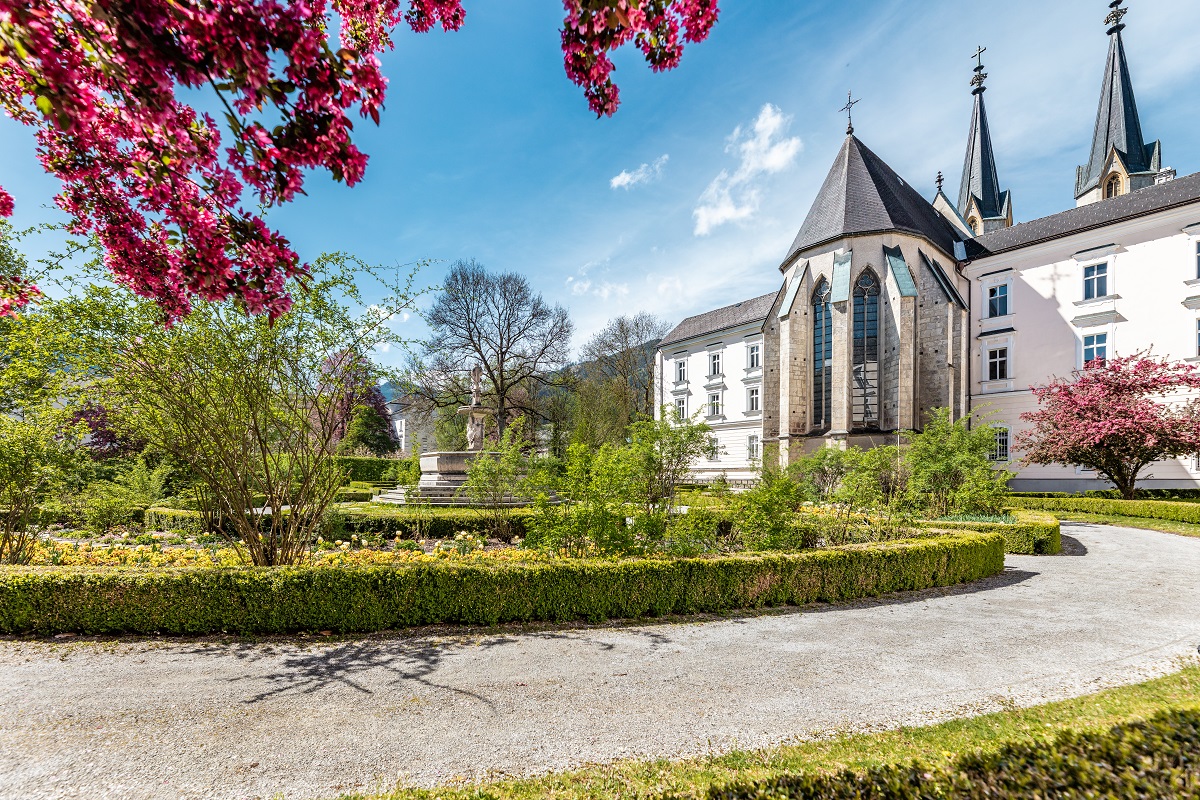
In the heart of Upper Styria, along the course of the Enns River, lies one of Austria’s most significant monasteries: the Benedictine Abbey of Admont. It is the oldest surviving monastery in Styria and has shaped and enriched the region throughout its eventful history.
Like Pichlarn Castle, it has existed since the 11th century and has evolved over time into a special place of spiritual energy. As the spiritual, cultural, and economic center of Upper Styria, however, its significance extends far beyond the region’s borders.
An eventful millennium
Admont Abbey was founded in 1074 and was closely linked to Salzburg in its early days. It was founded by Archbishop Gebhard of Salzburg. It was settled by monks from St. Peter’s Abbey in the city of Salzburg.
In 1120, a nunnery was added to the Benedictine monastery, but this was dissolved during the Reformation. In 1644, a grammar school was founded, which still exists today.
In the 17th and 18th centuries, extensive renovation work was carried out in the Baroque style. This work culminated in the 1770s in the construction of the beautiful baroque library hall.
In 1865, a major fire destroyed large parts of the monastery complex, but completely spared the library hall. Reconstruction of the monastery in the neo-Gothic style began immediately.

The baroque monastery library
The library hall is a masterpiece of Baroque architecture. Its dimensions (70 m high, 14 m wide and up to 12 m high) make it the largest monastic library hall in the world. It was built by the Viennese architect Josef Hueber, who modeled the building on the magnificent hall of the National Library in Vienna.
The seven domes of the library hall are decorated with frescoes by the painter Bartolomeo Altomonte. The themes depicted in the frescoes show the connection between religion, the arts and sciences.
Numerous special features make the library hall of Admont Abbey stand out from others of the 18th century. 48 windows provide a light-flooded room, the brightness of which is enhanced by the white bookshelves decorated with gold.
The library of Admont Abbey contains around 200,000 volumes and 1400 manuscripts from the 8th century onwards. From the 12th century onwards, the monastery had its own scriptorium (writing school) from which excellent manuscripts were produced.
A great variety
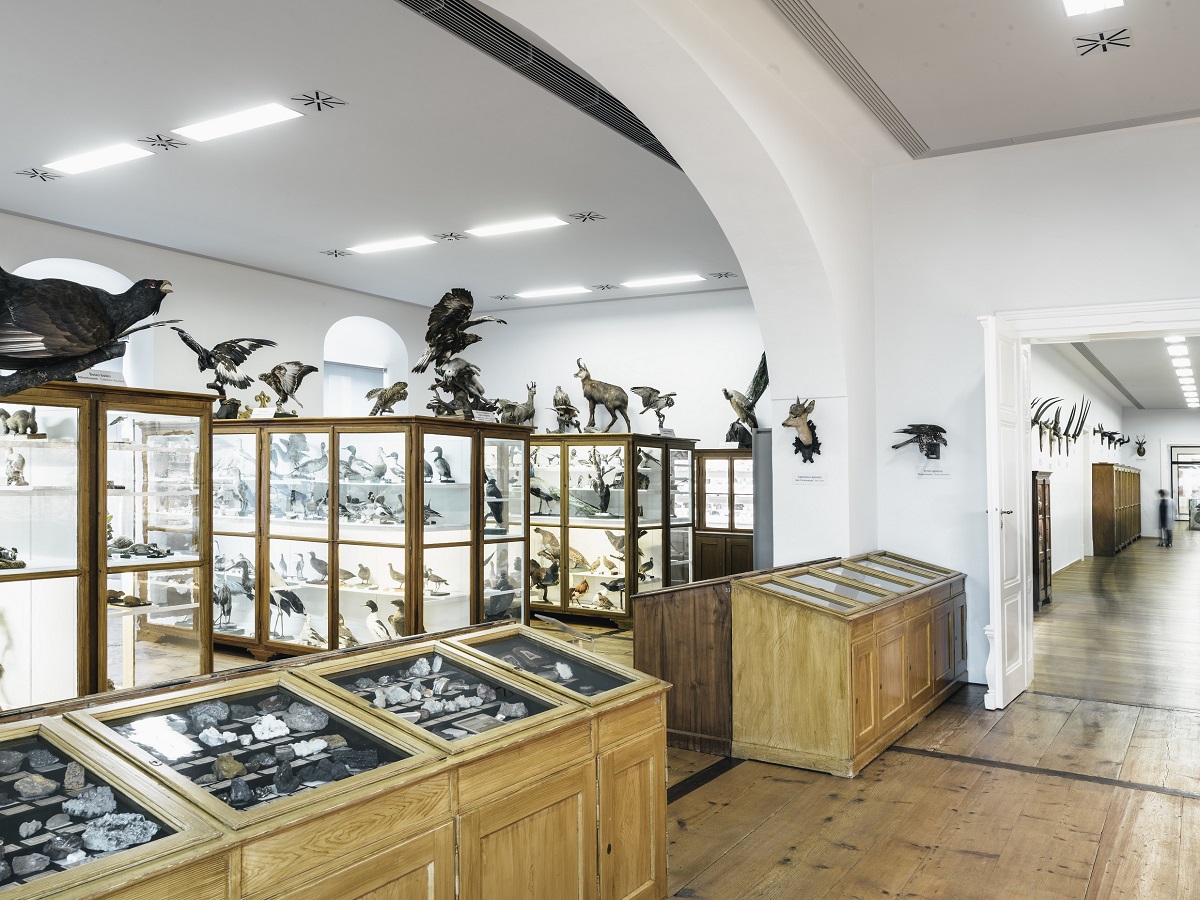
In 2003, Admont Abbey opened a large museum. It contains an extensive natural science collection and a valuable Gothic art collection as well as contemporary art and special exhibitions.
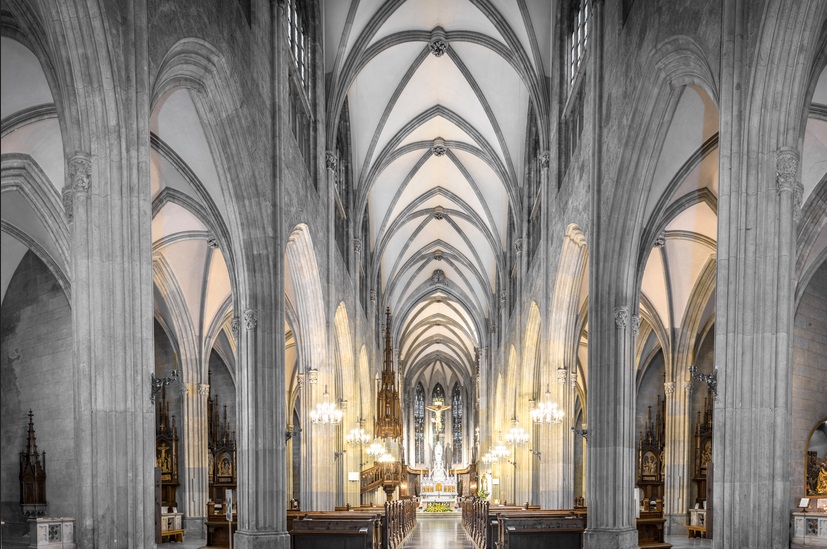
The abbey church is also worth a visit. Completely destroyed in the fire of 1865, it was rebuilt on the Romanesque and Gothic foundations and consecrated in 1869. This makes it one of the first large neo-Gothic sacred buildings in Austria.
The outdoor facilities are also not to be missed. A herb garden, a panoramic staircase with a viewing platform and a literary trail can be visited. The literature trail is part of a Styrian project that deals with eight valuable medieval texts at various locations.

What You Should Also Know
Admont Abbey offers numerous activities specifically for families, guided tours, and more. Admission to the museums and the library is €19.90 per adult. A guided tour can be booked for an additional €4.90 per person.
From the IMLAUER Hotel Schloss Pichlarn , it takes about 35–40 minutes by car to reach Admont Abbey. Alternatively, you can plan your trip by bike via the Enns Cycle Path. For this, you should allow about 2 hours each way (37 km each way).